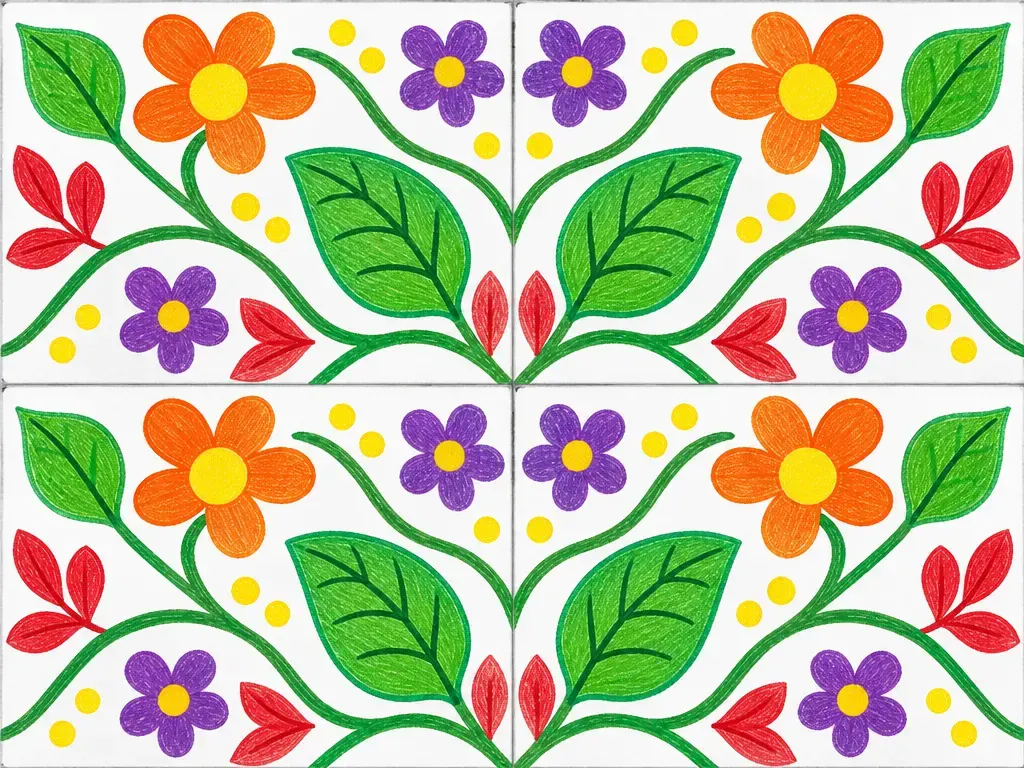
You can make a repeating paper pattern with a simple hand-drawn tile, a few everyday supplies, and careful matching at the edges. A tile is one small piece of the design that repeats like a stamp. Keep the first version simple: dots, leaves, stars, or a few wavy lines are easier to join than a crowded scene.
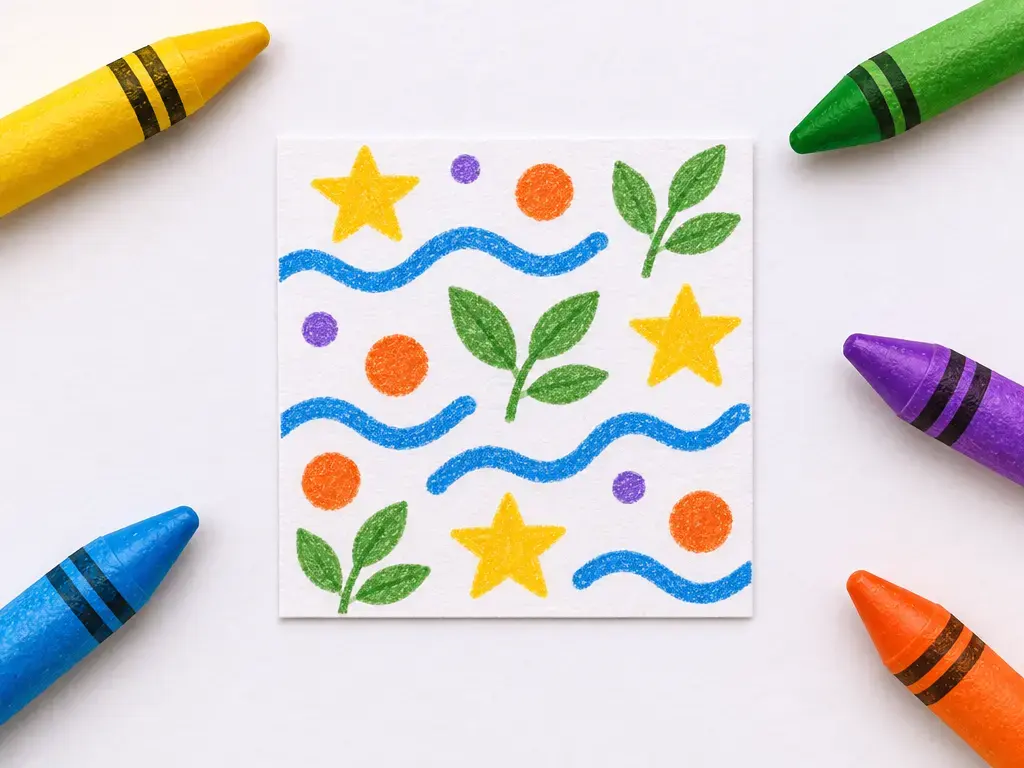
Gather plain paper, a pencil, a ruler, scissors, and coloring tools such as crayons or markers. Use a square sheet if you have one, or trim a rectangular sheet into a square. A ruler helps keep the edges straight, while the pencil lets you adjust the design before adding color. Younger artists can ask an adult to help with scissors.
Draw a small motif in the middle of the square, leaving clear space near every edge. Try a cheerful flower, a fish, or a cluster of circles. Make the shapes large enough to see, but not so large that they touch the border. A little breathing room gives you space to connect the pattern later.
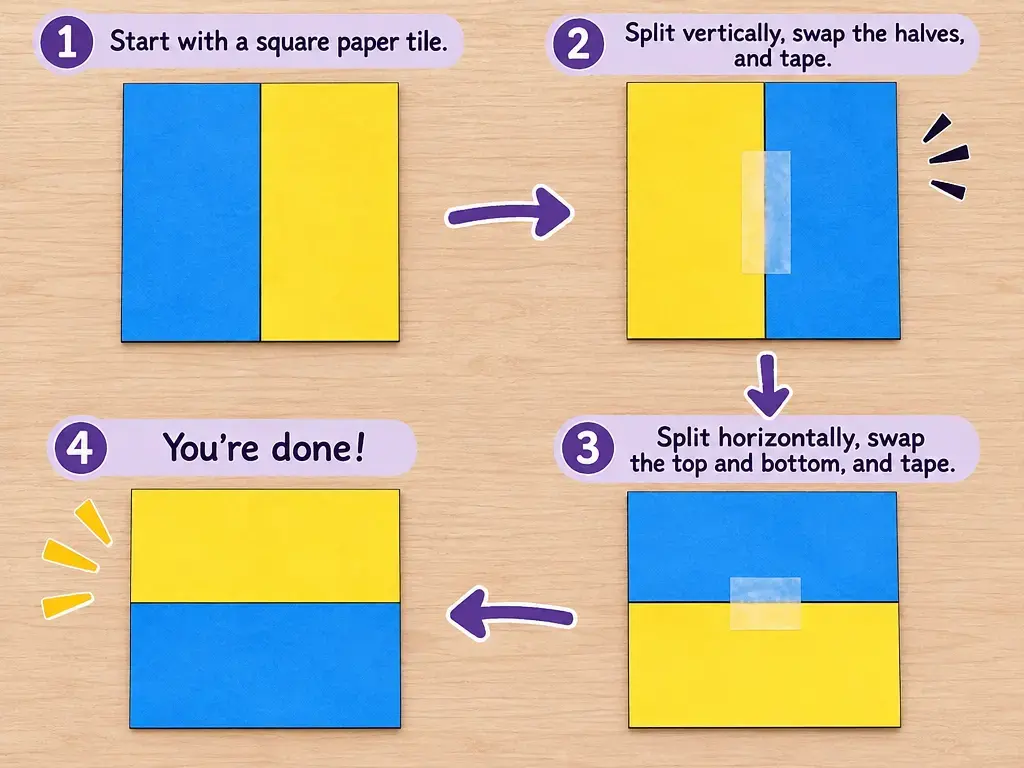
Cut the square straight down the middle from top to bottom, then move the left half to the right and the right half to the left. Match the cut edges carefully and tape them together on the back. The drawing now has a gap at the sides and continues across the center, like a picture that has been shuffled into two pieces.
Cut the joined sheet straight across the middle from top to bottom, then swap the top and bottom sections. Line up the new cut edges and tape them on the back. This second move brings the original outer edges together in the middle, so parts of the drawing that were near the border now sit opposite each other.
Fill the open spaces along the new edges with shapes that connect to the lines or colors already there. If a leaf is cut by an edge, draw the rest of the leaf where it continues on the opposite side. Keep the center clear of any details that do not match across the joins, and add color only after the connections look right.
Test the tile by tracing it onto another sheet and placing the copies edge to edge. Check that the lines and shapes meet on all four sides. If a gap appears, adjust the drawing on your original tile and test it again. Once the edges flow together, repeat the tile across a larger sheet to make wrapping paper, a collage background, or a colorful classroom display.